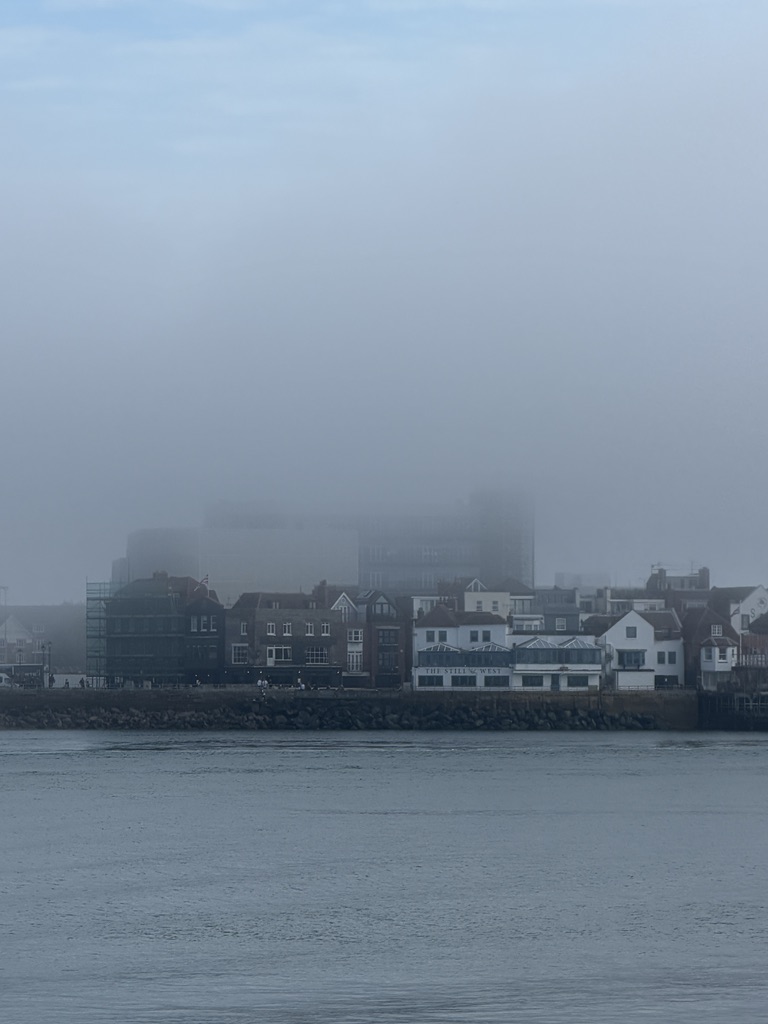
I am very aware that the picture isn’t really connected to the subject. I’ve used my best star picture a couple of times recently and thought you get bored with it. I hope to have mmore pictures before long.
Mondays sees me traveling to the Hampshire Astronomy Group (HAG). We are on Week 5 of a ten week course.
Tonights lecture was about two main topic; the brightness and measuring the distancce of objects. This involved a little bit of maths, a bit of trigonometry and logarithms.
The first of these is relatively straightforward sand involves the concept of paralax. It’s easy to demonstrate; hold up a finger at arms length, with an eye closed. look at the finger, and then close that eye and open the. other. Blink alternately. It’s obvious that the finger appears to change position relative to the background.
If you could measure the distance between your eyes and the angle by which your finger apparently moved against the backgreound, you would be able to work out the distance between your eye and your finger. The same principles apply to many objects in the sky.
The brightness of objects is slightly more complex. When you look at the stars in the sky, it quickly becomes apparent that they are not all of the same brightness. But is that difference in brightness due to the object not being that bright, or is it a bright object further away? This introduces the concept of absolute and apparent brightness. Astronomers have a method for working out the absolute (that is its actual) brightness.
I had a little bit of awareness of the topics covered tonight, but it was a most educational session.

