I was thinking of a small trip out that we did to a small place not far from us called Warsash. I’ve just found the photos that I took there, and I’m slightly distressed to find that the trip was over 4 years ago. That came as a bit of a shock. But it wasn’t the trip, or the date that I wanted to mention – it was the beach. What was it about the beach that brought my mind back to it – I’ll answer that below.
But first, I want to briefly talk about the u3a project for Geology that I mentioned in this post: https://localitystories.com/2026/05/16/1994-substack/ I said I had thought of what I could do, and that is I wanted to have a little understanding of Stokes Bay Beach.
Here’s a link to the beach on Google Maps: https://bit.ly/Stokes_Bay. The beach is made up almost exclusively of Shingle, and it is a managed beach, which means that it plays a role in coastal erosion. Now the coastal erosion is not my primary interest here, the importance of recognising how the beach affects erosion is recognised by the council, and that is why it is managed.
No, my primary interest is what happens to the shingle and the effect of longshore drift. I went on a bit of a fact-finding trip, and I have to say that I found a lot of facts.
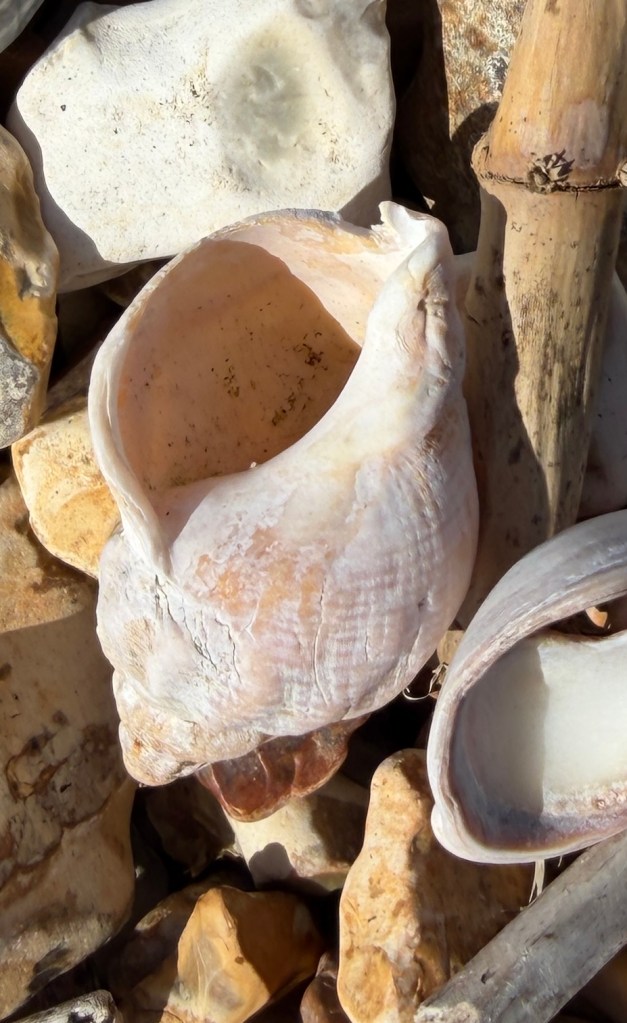
One thing that surprised me is that the western end of the beach is where the bulk of the material used in managing the beach might be stored. When I went for a look today, this was the first area where I spent a bit of time, and this is where I found the shell in the header picture.
I must admit I was very surprised to find that there were a lot of shells in the area, not as many as Warsash, but quite a few. This was the first of several surprises. As time moves on, I hope to write about more of them.

