Only 5 days ago, I did a u3a review. The Geology interest group was one where I had recorded “No Task – Yet”. Well, I think I have found one.
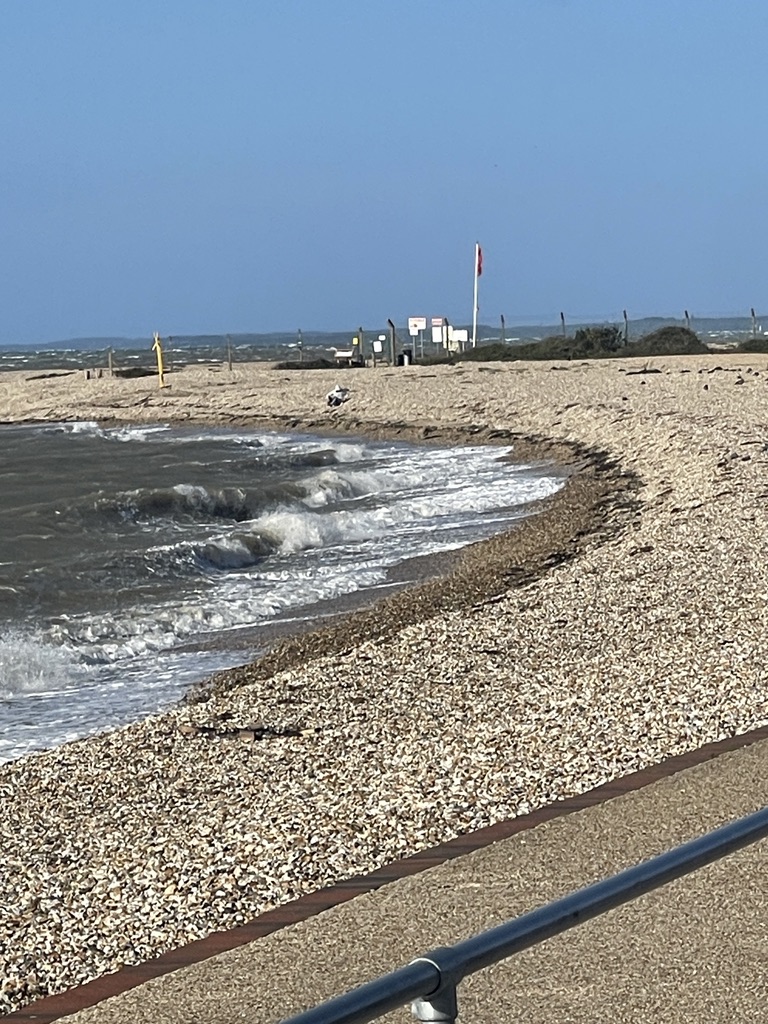
We go to the beach fairly regularly, say a couple of times a month, even if it is only for fish and chips. Recently, I have found myself looking at the beach differently than I normally do.
I’ve never given much thought to all the shingles before. I’m wondering about the stones that are there. But now, I am wondering where the stones come from? Are the stones being moved along the beach?
It’ll give me a reason to get out of the house, and when I’m there, pay a bit more attention to it. v
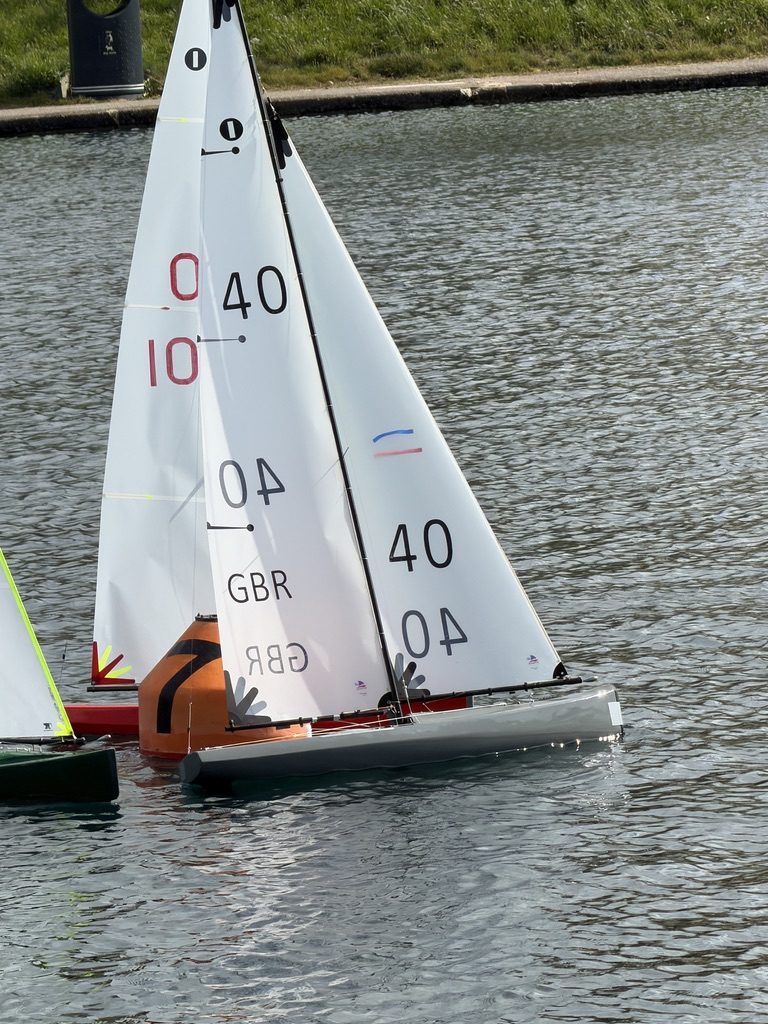
The Model Yacht club was active today, racing. There was one yacht which was well out of it. I couldn’t help wondering if a prospective new member was controlling the yacht and was doing the same as I did when I was thinking about joining the club,
I was able to watch the pond clearer in operation. It is a good few years since I first saw so it was lovely to see it clearing the lake grass.
The jellyfish were out in force today. I am sure there are thousands of them in the pond. I’ve said in other posts, I wonder if they interrupt the models’ sailing.
Talking of the jellyfish. I have some exciting news about them, but I am going to leave it to the next Letter To Steve (No. XII)
I did have one unpleasant experience. Whilst on the way home, I developed an intense pain in my left knee, it left me hobbling to get home. I have a Drs appointment tomorrow.
A while before I joined u3a, I started reading some history books. Briefly, I became interested in the English Civil War, and bought a book about it. The problem with the book was that it didn’t tell me what led up to the start of the war.
I temporarily gave up on the book (OK, temporary being almost 3 years). I went back to a period where I expected there would be good records as evidence for today’s history books. That period turned out to be the time of the Plantagenets, the 12th & 13th Centuries, and I started reading from there. I reached a point in a book about the Stuart Kings where I felt comfortable going back to the original book.
This detail is important because, as I was reading the books, I became increasingly interested in the societies in which these people lived, and the level of organisation that existed at that time.
Ironically, I am going to mention an undertaking that happened roughly 100 years before the Plantagenets; the Domesday Book. With that, and society after that time, there were events that continually caused me to wonder, “How did they know how to do that?” It wasn’t what they did, it was how they did it.
Enter the u3a. There are two groups of which I am a member, the Gosport group “History”, and the online interest group, “Archaeology”. As I’ve taken part in those groups, I have been reminded to ask that one question.
I suspect it is a question that will stay with me.
Tonight was camera club night. It was a member’s night, when we get to choose what we are going to do, well, almost. I think it might have been Tim, the club chairman, who decided the topic for the evening.
Some members brought in setups; Jon was showing how to do photo-stacking, Mike was doing macro, and another member was showing his setup for doing still life. There were a couple of those.
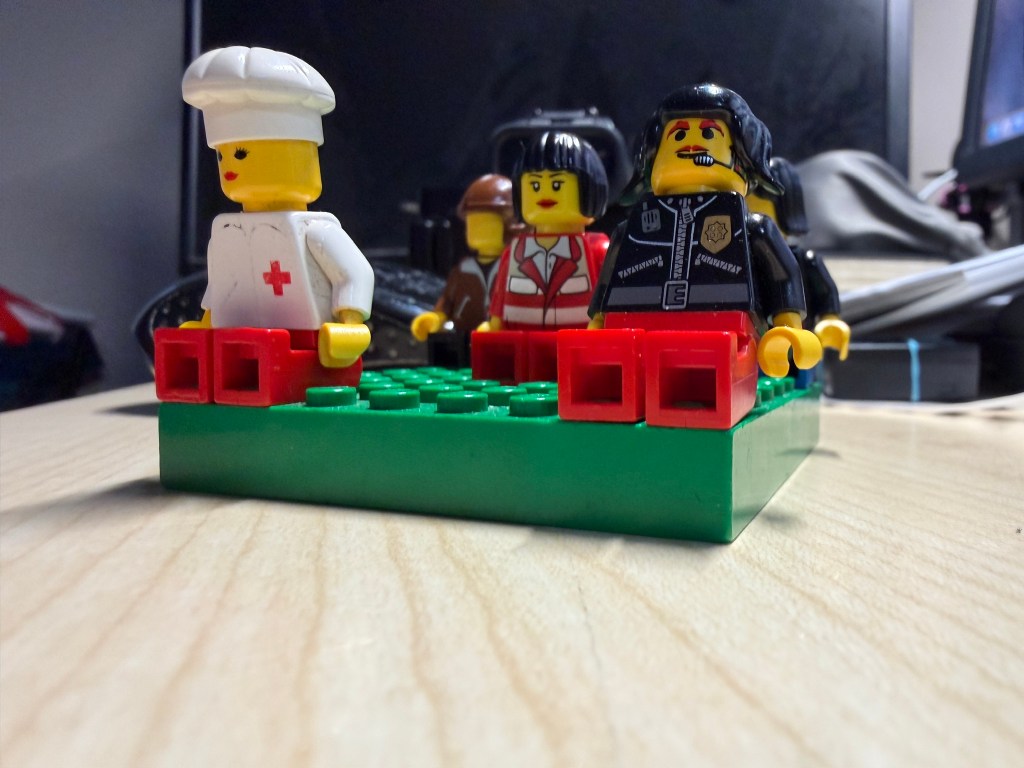
I had taken in my D5300, the macro lens, the lights, and of course the lego figures. I got the figures set up so that I could focus on each figure in turn, and that should provide the basis for a photo stacking exercise.
I did a couple of different configurations of the lego figures. I am not really that competent with macro lenses, and wanted to learn some things about them, e.g. how fare away can I be for the subject to fill the screen. I also learned that I really do need to get a remote control for the camera. When it came to the stacking, the end result had a slight blur on one of the figures, indicating that it or the camera moved during the exposure. Much more likely to be the camera, rather than the figure.
Tim was using his laptop to demonstrate how to do focus stacking. He was talking Elayne through it, so I stood and listened. He had produced a quick guide on how to do it, very useful. The way he laid it out, made it look very straightforward. I’m looking forward to having a go.
We all agreed that it had been a good and entertaining evening, with a bit of learning thrown in as well.
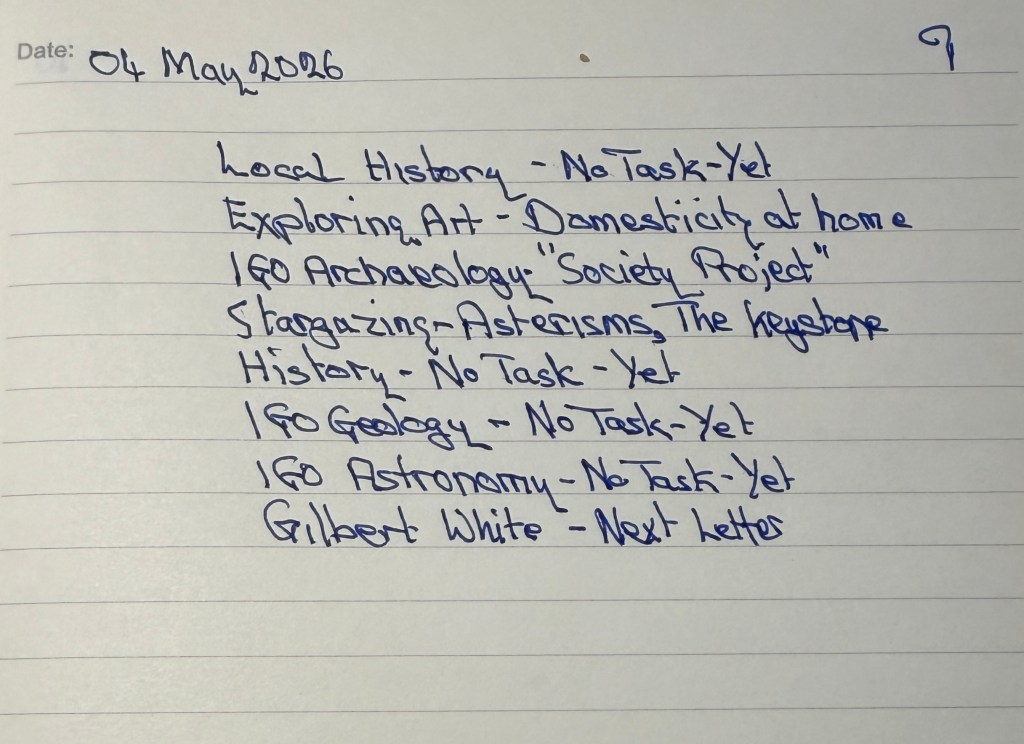
I joined the u3a in early January. That’s nearly five months ago, I can hardly believe it. I thought this would be a good time to sit back and look at how things are going. I wrote a quick list of the groups I’m involved in.
Where there’s an opportunity in a group, I like to come away with a task. A good example of this is Stargazing, and my hunt for asterisms (https://localitystories.com/2026/05/01/1981-asterisms/). Of the seven u3a groups I’m a member of, I’ve given myself tasks for three of them, plus. my ongoing Letters to Steve.
None of these tasks is tied to a specific timetable. I certainly don’t feel overwhelmed. What particularly delights me, though, is the learning, including the research techniques, some of which I wish I had learned years ago.
The u3a is giving me the opportunity to learn, both at my own speed and in areas that genuinely interest me – not what somebody else thinks I should learn.
I read through Letter XI, and I confess, I was more than a bit surprised by the first paragraph. Gilbert had acquired a dead falcon. Taking it into his home, he took measurements of it, and looked at its characteristics. That kind of floored me a bit. What could I do that was in any way similar to that?
I wouldn’t pick up a dead animal and bring it into the house, and then start poking and prodding it, so there seemed to be no equivalent activity that I could comment upon. But then I remembered Road Kill.
Deer, foxes and badgers are probably the most common animals that I’ve seen at the roadside. It always saddens me when I see them. I wonder if there are people who would stop and pick it up, especially the deer, as that means venison. I also wondered if there was any legislation that deals with roadkill, and organisations responsible for removal? I had to Google that question.
The law is very confusing. Not even a search could clarify things for me. Apart from the health risks of picking it up for food, it’s probably best to just let the local authorities or police know it’s there.
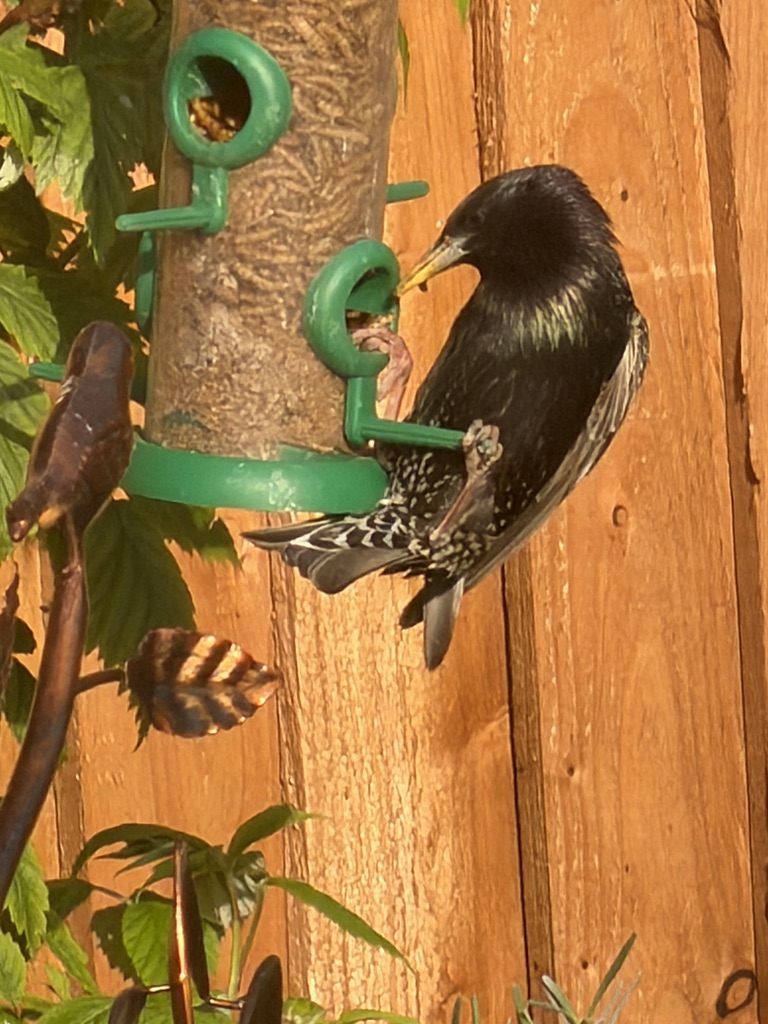
Gilbert’s letter XI goes into a lot of detail on his local bird population, including species names. I’m not going to do that, but I do like talking about the birds and other life that we get. The starlings in particular deserve a lot of attention.
I do feel a little bit guilty. I could have used the word entertaining when watching the birds in the garden, on the table and at the feeder. We are being entertained by their urgent need to hunt for food. I just don’t think it’s right that we draw pleasure from their activities, but at least I do put food out for them, and it is lovely to see them take that food.
Hover flies are fascinating. I quite often sit in the garden and watch them. They do settle, of course, and if I were to get a photo of them, it would be then. The chances of getting a picture of them in flight would be verging on impossible for me. They are so fast, and their direction appears to be random.
Another area that I can explore and introduce a regular update on my blog is the two compost bins we have. They are both full at the moment, and when I lift the lids, there is frantic scurrying. We even have slowworms, which we see occasionally. I am going to keep an eye on how the bins are doing and will comment if I see any big changes.
For several weeks now, I’ve had a thought in my head, that lead to today. I went to London, for a very specific purpose.
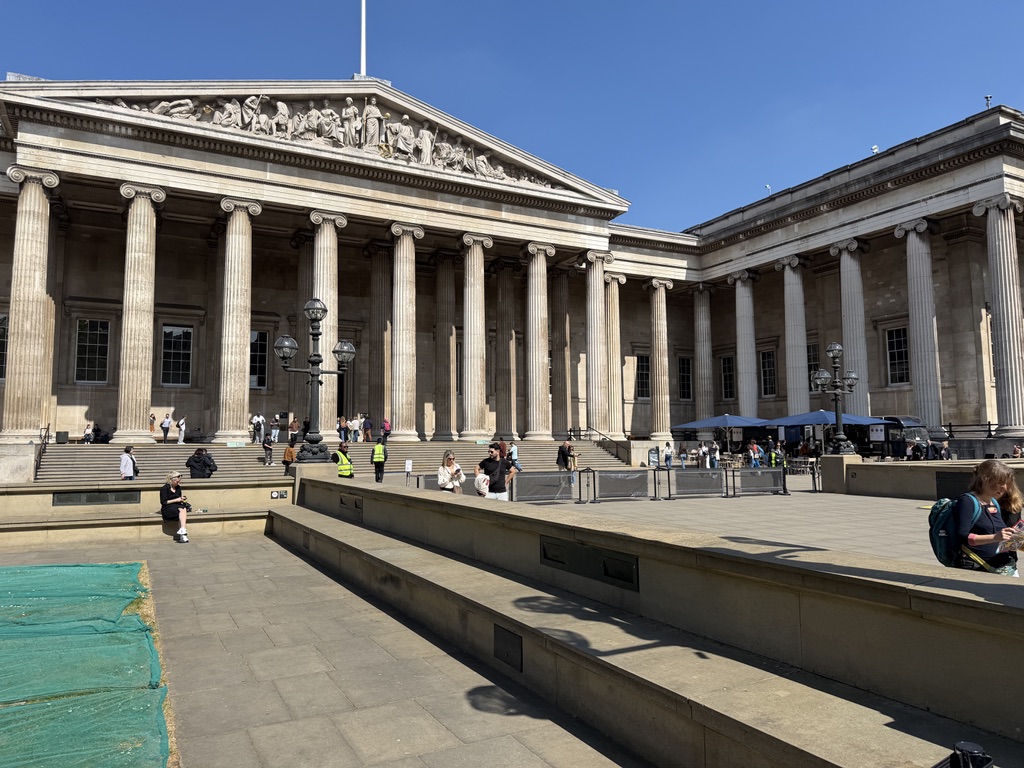
My first port of call was the British Museum. I’ve walked past this grand establishment before, but I have never been in. It almost didn’t happen. It’s best to book a ticket for even a general visit; even though entry is free, it can get very busy, and a ticket ensures entry. I had looked at this a while ago, and I confess, had forgotten all about it. Luckily, when I arrived this morning, there was no queue, and I was straight in.
A check with the enquiries desk told me that what I would be interested in is Gallery 51. This covered England and the Middle East, from 10,000 to 800 BC. The room was full of artefacts from those times. The feelings I had were so much more intense than when looking online. Being almost able to reach out and touch something 10,000 years old was amazing.
One display, relating to blacksmiths, was interesting. Apparently, in the first century, the temperatures they were able to achieve weren’t enough to melt the metal, only soften it. The question that came to me was how they made the anvils on which the metalworking was done?
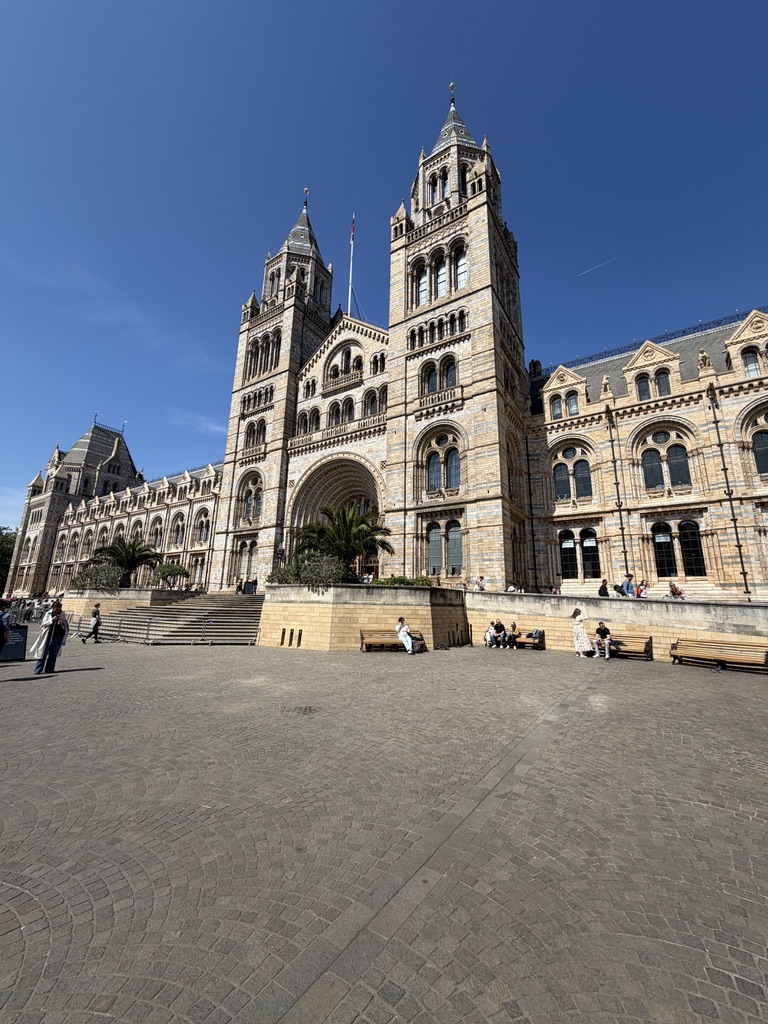
After I had mostly satisfied myself (I think I will be going back) with the British Museum, I slowly made my way to the Natural History Museum. Here, I could have faced a much worse entry issue. Waiting times for walk-in visits were around an hour and a half. Luckily, I had booked an event. That guaranteed immediate entry.
The event was Visions of Nature, which was an augmented reality experience. It was interesting and very well done. But that was not the reason I was at the museum.
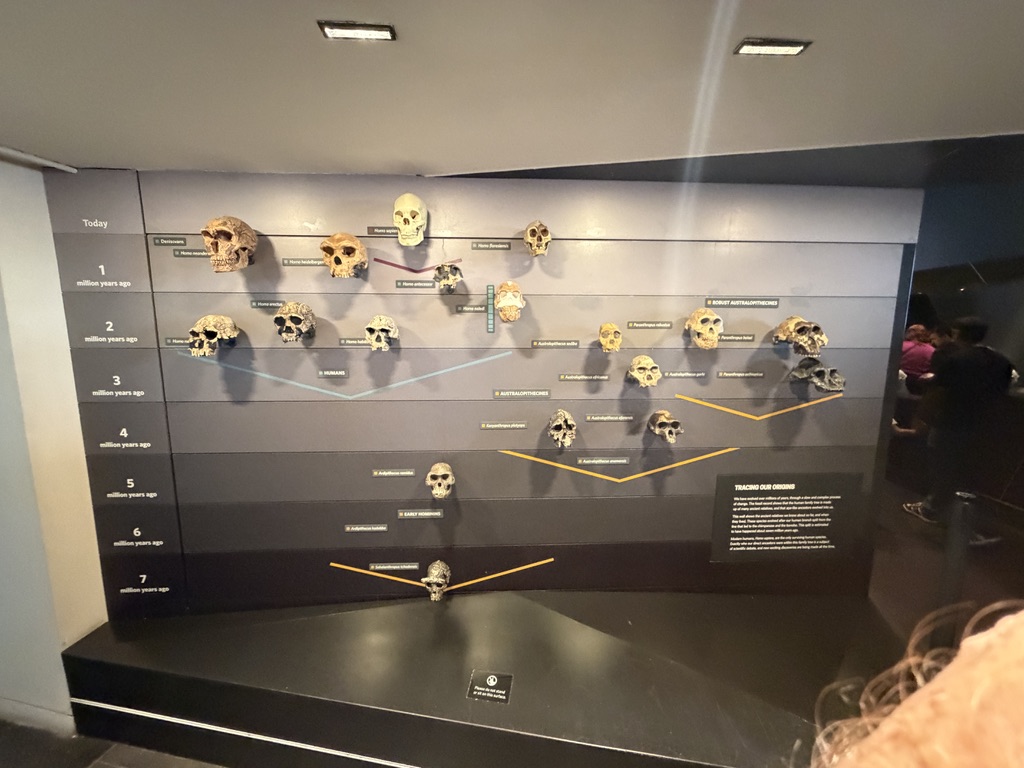
After the experience, I made my way to the other end of the museum (I was clocking up the steps today, and the flights of stairs climbed). This time to Human Evolution.
Whilst the British Museum had been very interesting, the displays in the Natural History Museum were really much closer to what I had been looking for; This representation of the evolution of Sapiens.
That, and some of the artefacts, worked stone tools, gave me a good picture of where we fit into the picture.
At the u3a Stargazing session on Monday, we started talking about Asterisms. Beyond knowing they were something to do with stellar arrangements, and didn’t fully understand what an Asterism was. I didn’t know that I had been looking at them most of my life.
There are constellations that I have known for a very long time. One of them is Orion. I know the constellation (although I’m not very confident about the bow). I know two of the main stars, Betelgeuse (ask 10 people how to pronounce it, you are likely to get more than one different response) and Rigel. I know where the other stars that make up the body. One of the most obvious characteristics of Orion is his belt, the three stars across the centre of the body. What I didn’t know was that the belt is an asterism. It’s like an unofficial constellation within the official constellation.
I’ve found it very easy to forget that the Greater and Lesser Bears are not just the bigger and smaller ploughs. Both of these are asterisms.
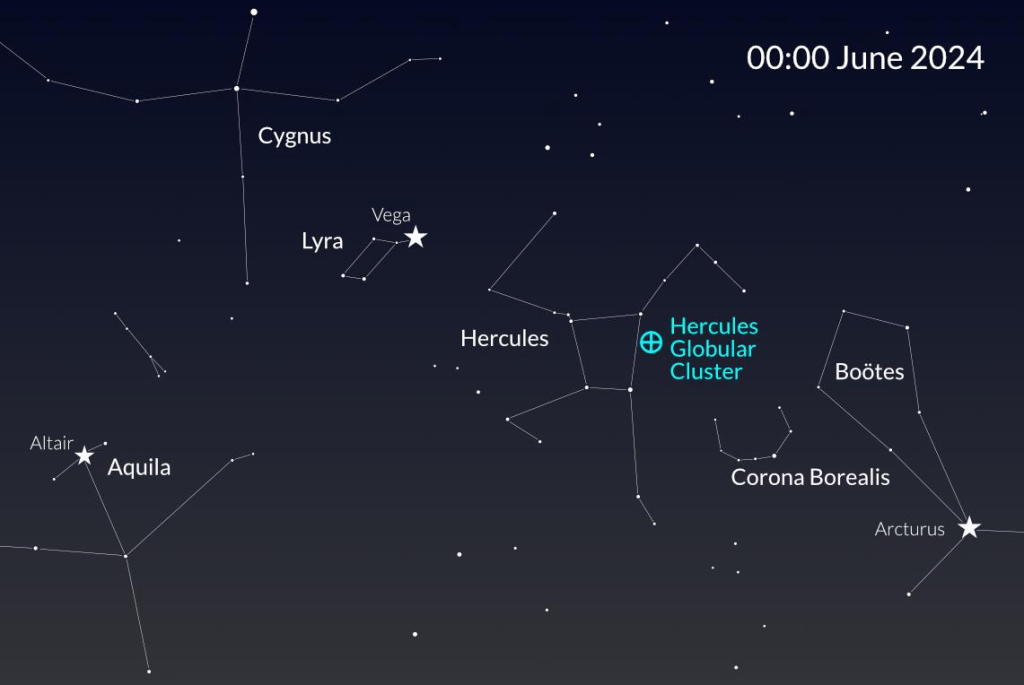
The point of all of this is what came out of the Stargazing session. Antony suggested that I look for the Keystone. The Keystone is an asterism within the constellation Hercules. Look at the header picture, the “almost” square in the centre of Hercules is the asterism.
Last night (30. April – 01 May) I went out just before midnight, letting my eyes become accustomed to the dark. I had binoculars and Stellarium in night mode (showing red).
I know where the best guide star for Hercules is, Vega in Lyra (I learned that last week, waiting for the meteor shower). I used it to find Hercules. The moonlight was so bright that it was difficult to see the stars, so I ended up using binoculars to focus in.
I’m fairly confident that I found the Keystone, but could only confidently see three of the four stars that made it up. I understand that the fourth star is the least bright, and it could definitely have been overshadowed by the light of the moon.
I think it is fair to say that the hour I spent looking for and at the keystone asterism was well worth it, and I will definitely have another go when the moon is absent.
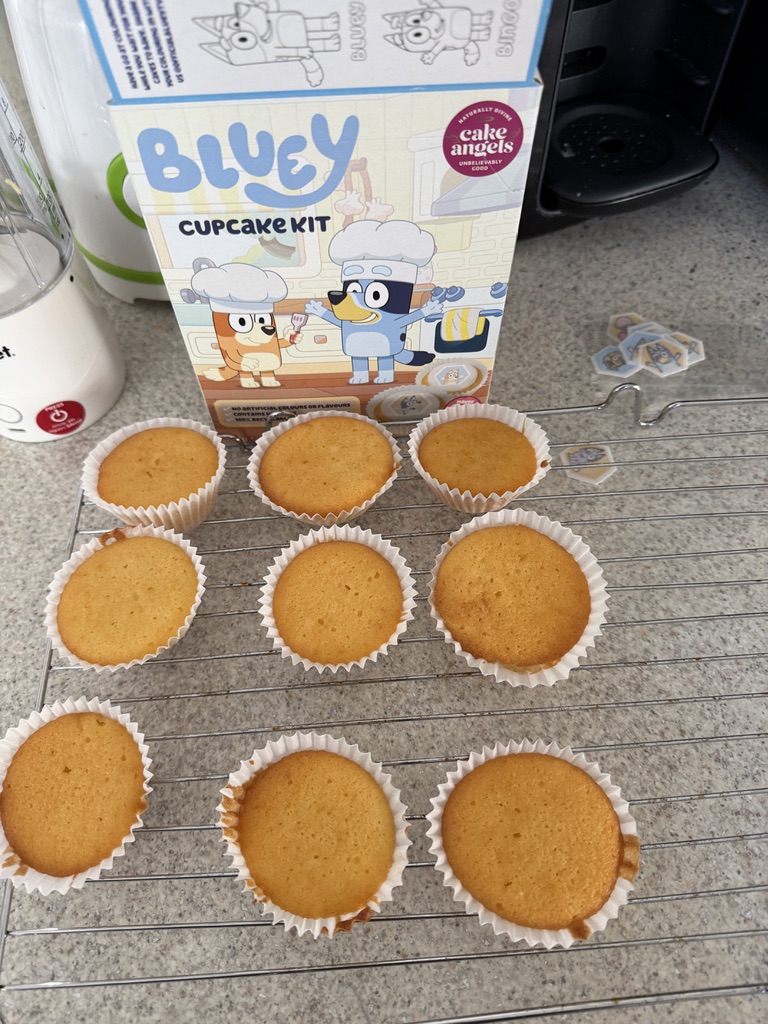
I didn’t make these. Aurora helped Elayne make them. Not long after this, they were topped off with icing and the little hexagonal disk you can see in the top right corner of the picture – they are edible. The cakes were very nice, light and tasty. They were nice and soft, you can’t even tell which one Aurora shoved her finger into!
Some mornings when she is with us, she’ll have a nap. Not this morning, Elayne tried to get her to settle, but she wasn’t having it. Elayne gave up and brought her down.
We decided to go for a bit of a drive before lunch, and as is usually the case, we’d only just started moving, and Aurora was out like a light. That meant we had to wake her up for lunch at Claire’s, the cafe attached to Thorngate Hall. Waking an 18-month-old up from a deep sleep is no easy task and has consequences. One very grumpy child for a start.
After Lunch, there was a brief period where everybody relaxed before Elayne got Aurora in the car to take her back to Mum & Dad’s.
I was left to my own devices. There was some tidying up and filling of the dishwasher, and sorting of washing. Once I’d done that, I retired to the office, so that I could sit in front of the computer. I’m afraid I did a bit time wasting and “Doomscrolling”. I also wanted to take part in The Thursday Night Net.
The net was quite small tonight; it can average 10+ members, but tonight it was just 6 members. That was fine, we all got in some good overs.
Today, I was on the monthly Shed Trip. The April trip was to the GWR Museum in Swindon. Unlike last month, the coach driver took us to the motorway via junction 9. It was a much quicker exit from Gosport.
The trip to Swindon took about an hour and a half. I was a bit surprised (I really shouldn’t have been) when most people got off the coach and went straight to the cafe. I didn’t need to eat. I’d got Elayne to drop me off at Fort Brockhurst. She was on her way to babysit our granddaughter. I went to the Premier Inn for breakfast, which was very nice.
After a cup of tea, we went back down to the entrance for a briefing on how the museum works. That was very useful. We then started to explore.
The museum, to me, served two purposes; it showed the scale of the operations that were necessary to run such an organisation is massive. At the entrance to the museum, they had a map. The building we were in was just a very small part of the operation, and yet the building really was quite big. At the time, it contained a number of major operations, including final assembly, where all the components of an engine (which were all manufactured on site) were brought together.
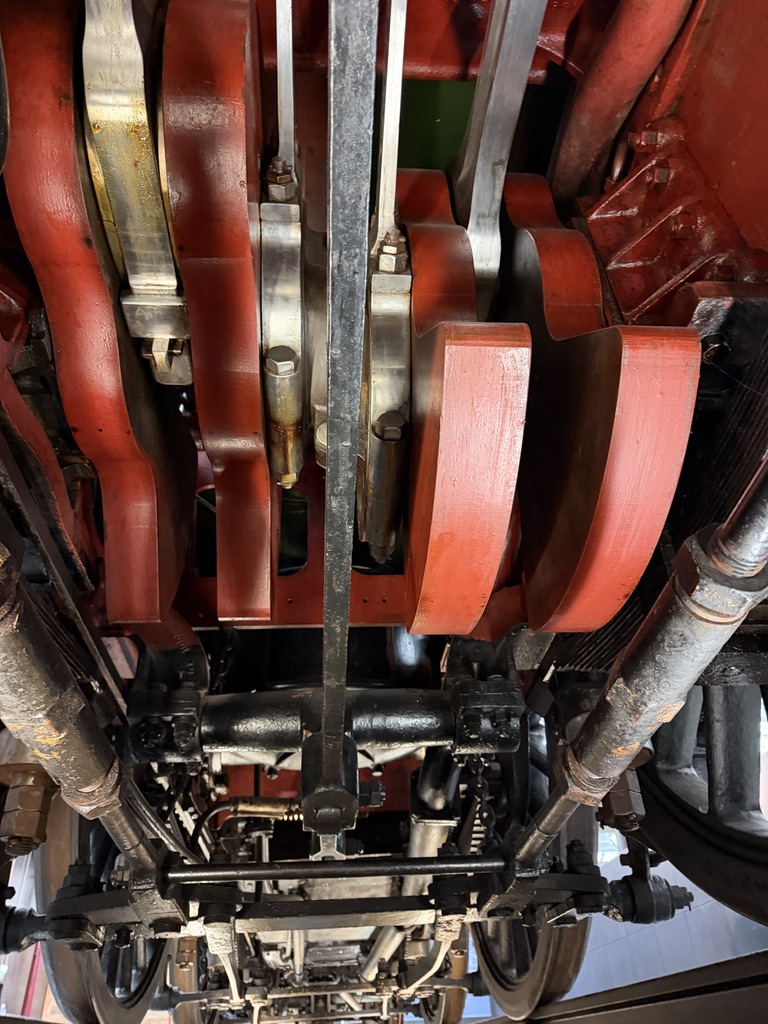
The story was fascinating, and the displays were excellent. Being able to get under a train and have a look up was fascinating. The train driver simulator was fun, as was the signalman role (which I thought was very well implemented), but I think my interest is in what happens below the signal box (all the interlocking, etc).
The one part of the museum that I found surprisingly moving was the displays that described the winding down and eventual enclosure of the yard, and the impact that had on the employees.
I didn’t read everything in the displays, but I did linger on some, and it took me not quite three hours to get around. We then had the call that we were heading back, via a Wetherspoons.
I took the time in Andover to have a quick look at their CEX. There was a camera that I was interested in, but after trying it, I decided against it.
I also had a quick look in Waterstones, but I really do have enough books at the moment.
Hi! my name is Sebastian (You can call me Seb!) ...welcome to my Blog. I'm a photographer from Worcester, Worcestershire, England. Thanks for dropping by! I hope you enjoy my work.
I'm here to work on fiction. Occasionally I'll blog but that's certainly not my focus. You have a specific fiction genre or format you can't find enough of? Ask me. Maybe I got it. I migh share it with you. Otherwise, leave me alone; I'm toiling away at my workbench.