Tonight was a Bar night, which is always good because it gives us a chance to get to have a chat with people and get to know them a bit better. These bar nights happen every other week at the moment, although it looks like that will be changing in the next season. We will be moving to 4 nights a month in a reserved room. Which in a way is nice, but it also means we may lose that opportunity for informal contact unless they are carefully arranged.
We had a very pleasant evening.
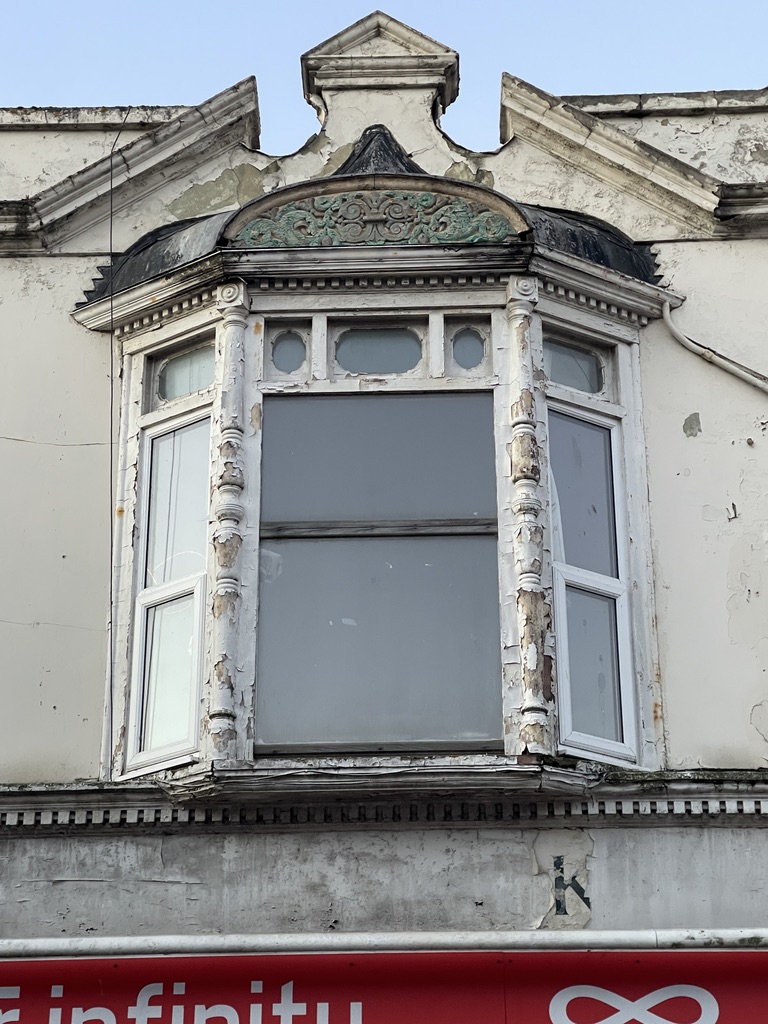
I took this picture on my morning walk yesterday. I need to do a little bit of research, but I get the impression this is a very old building. It looks a bit worn, but I can’t help imagining what people who used to live there would see when they looked out on the high street. This is what ChatGPT told me about the window;
This is a great example of late Victorian or possibly Edwardian architecture—definitely something from the late 19th to early 20th century. Here’s what stands out:
Key Features:
- Bay Window: The projecting bay window with three facets (center and angled sides) was very popular in the Victorian period, especially in shopfronts with residential accommodation above.
- Decorative Corbels and Columns: The vertical decorative elements flanking the window mimic classical columns—another Victorian trait.
- Pediment and Gable Ornament: The triangular pediment at the top, along with the shaped gable detail, is consistent with neoclassical influence popular in that era.
- Carved Panel Above Window: That green-patinated section with scrollwork and foliage motifs is a decorative panel, possibly made of pressed tin or terracotta. This was typical embellishment in urban commercial buildings of the period.
- Condition: The peeling paint and general wear suggest it hasn’t been maintained in decades, which makes it all the more historically intriguing.
Historical Context for Gosport:
Gosport High Street saw major development during the 19th century, especially as the town grew in importance thanks to its naval connections. Many buildings from this era remain, especially above modernised shopfronts. This window likely belonged to a late Victorian shop-residence combo.
 Bills Posts